Introduction
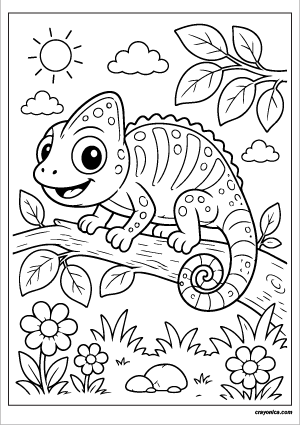
A Cute Chameleon Coloring Page is a fun way for children to explore one of nature’s most fascinating reptiles. This friendly chameleon sits happily on a tree branch with a big smile, curly tail, and simple surroundings that are easy to color. Designed with bold outlines and large open spaces, this coloring page is perfect for preschoolers, kindergarten students, and young artists. While coloring, children can learn about reptiles, nature, and the amazing ability of chameleons to blend into their environment through colorful camouflage.
About Chameleons
Chameleons are unique reptiles best known for their color-changing abilities and slow, careful movements. Although many people believe they change colors only to hide, chameleons also change colors to communicate, stay comfortable in different temperatures, and express their emotions. Most chameleons live in trees where their special feet and curled tails help them climb branches with ease. Their long sticky tongues allow them to catch insects from surprising distances, making them one of the most interesting reptiles children can discover.
Why Kids Love This Coloring Page
Children enjoy coloring chameleons because they can use almost any color they like. Unlike many animals, a chameleon can be green, yellow, blue, orange, or even rainbow-colored in a child’s imagination. The curled tail, friendly eyes, and simple tree branch create an engaging picture without feeling too complicated. Kids also enjoy pretending their colorful chameleon is hiding among leaves or exploring a sunny forest.
How to Color
Start by choosing your favorite colors for the chameleon’s body. Traditional greens are always beautiful, but bright blues, oranges, pinks, and purples create fun fantasy versions too. Add different shades to the stripes or spots for extra detail before coloring the tree branch, leaves, flowers, and grassy ground. Finish by creating a sunny blue sky or a peaceful forest background to complete your colorful reptile adventure.
Fun Facts About Chameleons
Chameleons can move each eye independently, allowing them to look in two different directions at the same time. Their long tongues can extend farther than the length of their bodies to catch insects in a split second. There are more than 200 known species of chameleons living in forests, woodlands, and tropical habitats around the world. Their curled tails work like an extra hand, helping them balance safely while climbing through trees.
Benefits of Coloring Activities
Coloring reptile-themed pages helps children improve fine motor skills, concentration, creativity, and hand-eye coordination. Nature activities also encourage curiosity about wildlife and different animal habitats. As children carefully color the chameleon and its surroundings, they practice observation skills while learning that every animal has unique adaptations that help it survive in nature.
Conclusion
The Cute Chameleon Coloring Page combines creativity with wildlife discovery, giving children an enjoyable way to learn about one of nature’s most colorful reptiles. Its simple design makes coloring relaxing while inspiring curiosity about forests and fascinating animals. Continue your reptile adventure with the Cute Turtle Coloring Page, explore tropical forests in the Cute Iguana Coloring Page, meet another climbing reptile in the Cute Gecko Coloring Page, discover the world’s largest lizard in the Cute Komodo Dragon Coloring Page, and learn about powerful reptiles with the Cute Frilled Lizard Coloring Page.
FAQ
What is a chameleon?
A chameleon is a tree-dwelling reptile famous for changing its colors and climbing branches.
Why do chameleons change color?
They change colors to communicate, regulate body temperature, and sometimes blend into their surroundings.
Where do chameleons live?
Most chameleons live in forests and tropical woodlands, especially in Africa and Madagascar.
What do chameleons eat?
They mostly eat insects, catching them with their long sticky tongues.
Who is this coloring page for?
This coloring page is perfect for preschoolers, kindergarten students, elementary-aged children, homeschool activities, and classrooms.